Friday, May 24, 2013

Dolch word list SIght Words

Dolch word list

From Wikipedia, the free encyclopedia
Jump to: navigation, search
The Dolch Word List is a list of frequently used words compiled by Edward William Dolch, PhD, a major proponent of the "whole-word" method of beginning reading instruction. The list was prepared in 1936. The list was originally published in his book Problems in Reading in 1948.
Dolch compiled the list based on children's books of his era, which is why nouns such as "kitty" and "Santa Claus" appear on the list instead of more high-frequency words. The list contains 220 "service words" that have to be easily recognized in order to achieve reading fluency in the English language. The compilation excludes nouns, which comprise a separate 95-word list.
These lists of words are still assigned for memorization in American elementary schools. Although most of the 220 Dolch words are phonetic, children are sometimes told that they can't be "sounded out" using common sound-to-letter implicit phonics patterns and have to be learned by sight; hence the alternative term, "sight word." The list is divided into grades in which it was intended that children would memorize these words.

Contents

Dolch list: Non-nouns

Pre-primer: a, and, away, big, blue, can, come, down, find, for, funny, go, help, here, I, in, is, it, jump, little, look, make, me, my, not, one, play, red, run, said, see, the, three, to, two, up, we, where, yellow, you
Primer: all, am, are, at, ate, be, black, brown, but, came, did, do, eat, four, get, good, have, he, into, like, must, new, no, now, on, our, out, please, pretty, ran, ride, saw, say, she, so, soon, that, there, they, this, too, under, want, was, well, went, what, white, who, will, with, yes
1st Grade: after, again, an, any, as, ask, by, could, every, fly, from, give, giving, had, has, her, him, his, how, just, know, let, live, may, of, old, once, open, over, put, round, some, stop, take, thank, them, then, think, walk, were, when
2nd Grade: always, around, because, been, before, best, both, buy, call, cold, does, don't, fast, first, five, found, gave, goes, green, its, made, many, off, or, pull, read, right, sing, sit, sleep, tell, their, these, those, upon, us, use, very, wash, which, why, wish, work, would, write, your
3rd Grade: about, better, bring, carry, clean, cut, done, draw, drink, eight, fall, far, full, got, grow, hold, hot, hurt, if, keep, kind, laugh, light, long, much, myself, never, only, own, pick, seven, shall, show, six, small, start, ten, today, together, try, warm

Dolch list: Nouns

apple, baby, back, ball, bear, bed, bell, bird, birthday, boat, box, boy, bread, brother, cake, car, cat, chair, chicken, children, Christmas, coat, corn, cow, day, dog, doll, door, duck, egg, eye, farm, farmer, father, feet, fire, fish, floor, flower, game, garden, girl, good-bye, grass, ground, hand, head, hill, home, horse, house, kitty, leg, letter, man, men, milk, money, morning, mother, name, nest, night, paper, party, picture, pig, rabbit, rain, ring, robin, Santa Claus, school, seed, sheep, shoe, sister, snow, song, squirrel, stick, street, sun, table, thing, time, top, toy, tree, watch, water, way, wind, window, wood

See also

External links

Culture Shock - 4. Agreeing to an appointment, promise etc and later changing it. ut as a whole we consider a broken promise a character flaw and frown heavily on this practice.

4. Agreeing to an appointment, promise etc and later changing it (Westerners do this to a small degree depending on the situation concerning appointments but as a whole we consider a broken promise a character flaw and frown heavily on this practice. Also the breaking or trying to change a contract is a no- no unless agreed upon by both parties. This is also where manipulation comes in and westerners don’t like to be manipulated. This happened to a native teacher in one of the schools with their contract. In the middle of the year the stipulation changed on the airfare going home in the next year contract and the Korean co teacher asked them to honor the change .Even though their contract was signed the previous year. The native teacher refused saying they wanted to keep the agreement they already signed. This caused a conflict in the relationship. We as foreigners don’t understand this behavior. Koreans sign contracts to buy cars, homes etc. Can they change these agreements on a whim or if their situations change? I hope not. How can a country be a civilized society if agreements mean nothing or excuses are so easily acceptable? This is how westerners generally feel

EPIK - Can you get along with Korean co-teacher? - Relationship with Korean co-teacher is the deciding factor in future work, and career prospects.

EPIK
- Can you get along with Korean co-teacher?
- Relationship with Korean co-teacher is the deciding factor in future work, and career prospects.

Thursday, May 23, 2013

Getting Up After Hitting Rock Bottom

Getting Up After Hitting Rock Bottom

Getting Up After Hitting Rock Bottom
Motivation

Getting Up After Hitting Rock Bottom

The ups and downs of life are what make it so valuable. We hit the lows before the highs, and the cycle repeats itself all over again, and most often, it’s without warning. The mayhem that is life is controlled by a clock that is watched by all who operate on a calendar schedule. We’re always waiting for the next big thing to go down, not knowing what the future holds.
It’s at times when we’ve hit the bottom that we’re most anxious for the next moment to be one of salvation to pull us from the sinking sand. Fear not, friends. Even if you feel you’ve hit rock bottom, it is not the end. That’s right — life goes on. Can you believe it? In times of desperation, when you feel like the world is against you, stay in check and get back up on your feet with these reminders.
Don’t pity yourself.
Remember, everything happens for a reason. We are meant to suffer through misfortune before we can reach the high points in life. Battling through the tough times makes you a stronger person, challenging you to rise to the occasion and conquer the bullish*t that gets in your way. If you’re feeling like you’ve finally hit the bottom, don’t pity yourself.
Everyone falls down sometimes. Surprise yourself with your inner strength and bravery. You can do anything if you want it badly enough. Instead of feeling sorry for yourself, take the negative sh*t that’s weighing you down and turn it into motivation. Let the lows bring you higher by developing a thicker skin each time you’re brought down.
tumblr_mly0vx7ZdG1qan7xfo1_500
Make an everyday to-do list.
Sometimes recovering from whatever it is that has you down is really f*cking hard to do. If you’re feeling so down that it’s hard to get out of bed and get started with your day every morning, make an everyday to-do list. It may sound petty and stupid, but it also might drastically improve your quality of life.
Getting yourself motivated to do anything when your mind is totally consumed with overwhelming negative thoughts can become a challenge to conquer every single day. Instead of focusing on the bad, an everyday to-do list gives you a handful of things to focus on day-in and day-out. Mine looks a little something like this:
1. Maintain a positive mind. Look on the bright side of negative situations.
2. Remove the word “hate” from your vocabulary. Is there anything worth so much negative emotion, anyway?
3. Forget revenge. Feel bad for those who bring you down — karma comes back around.
4. Make someone smile. It’s uplifting to know that you’ve made someone’s day just a little bit better.
5. Look for the good in people. Use their likenesses as motivation to better yourself.
Out with the bad; In with the good.
What is it that’s weighing you down? Is it your own mind, or is it some outside factor? Is it controllable? Many times, the things that have the greatest impact are within our control. If you’ve hit the bottom and there is clearly something you can do about it, what the hell are you waiting for? People will come and go in your life.
If there are bad people making a mess of your life and affecting your happiness, say goodbye. The number one person in life is yourself. If you don’t have happiness, then what do you have? Even if the negative factors aren’t physical people, the negative might be some other controllable situation like your current job or place in life. Make changes; sometimes change is good and should be embraced. If you absolutely dread going to work in the morning, find another job.
tumblr_lo4u4uIO4e1qbg5soo1_500
Even if your finances take a temporary hit, so be it. Money does not equal happiness. If you’re not happy with where you are in life, figure out where it is you want to be. You must first discover yourself and what you want from this life before you can enjoy it. Dismiss the bad, and embrace all of the good that this world has to offer.
Focus on yourself.
Rather than focusing your attention on the negative sh*t that’s keeping you on the bottom, focus on bettering yourself. If you have a negative mind, you’re going to have a negative life. Worry about getting healthy: mind, body and soul. Start working out if you don’t already. Working out not only improves your bodily health, but it energizes your mind, too.
If you’re feeling good about the way you look, you have a better self-esteem, which leads to a more positive outlook on life. Get a new haircut, go on a date, spend time with your family or go on a weekend vacation. Worry about bouncing back up from the low, rather than the low itself.
Stop waiting; Start doing.
Stop waiting for the next big thing to happen. If you’re living in the past, or looking forward to the future, you’re not living right. Live in the present and embrace all that you have to be grateful for. If nothing else, you’re alive and reading this, and that’s something to be thankful for. Stop looking back, stop looking forward and start working on the present.
You cannot change past mistakes or regrets; you cannot predict or alter what’s going to happen next. You can only make the most out of this moment, so make it a f*cking good one.
tumblr_m9wo84OYBs1qjdjrpo1_500
Let go.
It’s always darkest before the dawn. I live by this proverb, and it’s a constant reminder that no matter what situation is at hand, there’s always brightness ahead. No matter what you’re going through, it’s not going to last forever, and it’s not going to define who you are, or the life that you are living. Overcoming hardships is just a part of life. Sometimes mourning is necessary, but don”t linger. You have to let go. Let go of whatever is weighing you down, and move on with your life.
Life throws you curves, but you learn to swerve. In the end, you will get out of whatever sh*thole you’re in right now, and you will come out on top. Keep swervin’ friends.

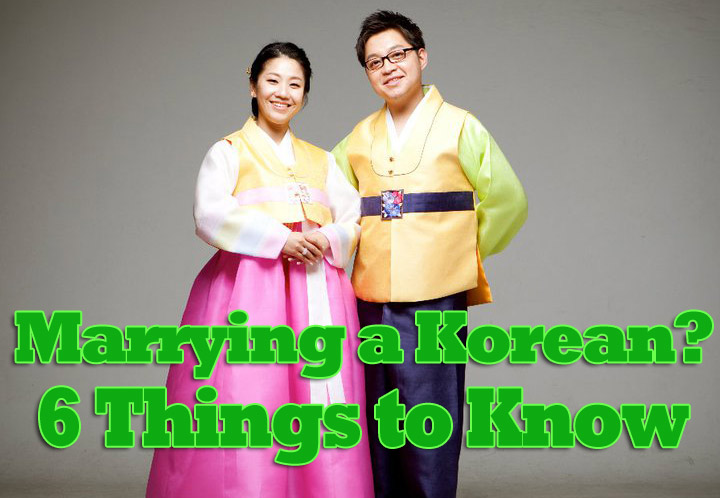
Want to Marry a Korean? Here’s 6 Things You Should Know!

Want to Marry a Korean? Here’s 6 Things You Should Know!


So without him knowing it, you’ve been planning on marrying G-dragon for a whole year now. And in your stalker mind, you’ve even dreamed up your own wedding! Well if it ever becomes a reality, make sure you know what’s expected of you if you’re marrying a Korean! (Weirdo :P )
Note: This is a list of common expectations for when Koreans marry other Koreans. But of course if you’re a non-Korean, you will become a multicultural family, and that means your Korean lover and his/her family will have to adjust to you as well. So not all may apply.

1. You’ll Need Mommy and Daddy’s Permission
Son, don’t you be marrying no crazies!”
So you’ve been dating that Korean for a while now and you’ve even got the whole Korean style proposal thing done. The girl’s got the ring and the boy’s got the swag. Congratulations! But it aiin’t official yet. Although getting married is about love, in Korea, many people also see marriage as a union of two families. And that means most marriage plans are on hold until the scary moment when both sides of the family meet. The families of the potential bride and groom will get together for an official dinner at a nice restaurant to make sure no one’s getting married to a family of crazies. And even if it’s a real life Korean drama love story full of childhood first kisses, life threatening diseases and sacrificial eye transplants, if the parents say no, then the wedding might not happen. (Of course, people sometimes go ahead and do it anyway. :P )

2. Parents will Pick up the Tab
“Daddy, Can you buy me a wedding?”
Weddings are expensive ordeals in any part of the world, and people everywhere don’t hesitate to spend butt loads of money on that one special day. And of course, weddings can be very expensive in Korea too. But if you’re still at the bottom working your way up to the top manager position at the local McDonalds, don’t worry too much. In Korea, most young people are broke too. That’s why most families will pay for their share of the wedding costs. That means most brides and grooms in Korea will not pay for the wedding themselves, but their families (parents) will. Korean parents see marrying off their children as their very last duty as a parent. Goodbye, so long, fare thee well young child. It’s a crazy butt load of money (see #3), but they’ll get it back. Big time (see #6).

3. Splitting Wedding Costs is Crazy Complicated
Or just avoid by marrying a Samsung heir

Wedding costs are always tricky arrangements for any marriage, and that’s why most families will figure out things amongst themselves (i.e. if one family is richer than the other, they may offer to cover more of the costs). So if you somehow convinced the heir to the Samsung empire to marry you, you’ll most likely get the most bomb wedding ever for basically just being an awesome husband or wife. For the rest of the not-so-lucky 99.999941%, many Korean families will split marriage costs like this:
Groom Side Bride Side
Wedding Ceremony (50%) Wedding Ceremony (50%)
Honeymoon (50%) Honeymoon (50%)
Apartment/Housing – the home itself (100%) Furnishings like furniture, appliances, etc. (100%)
Yemul (예물) – Wedding gift for the bride Yedan (예단) – Wedding gift for the groom’s family
Splitting wedding costs can be crazy complicated and that’s why we need the scientific chart above. It’s easy enough to see the wedding ceremony and honeymoon are usually split down the middle. But the groom’s side typically provides the payment for the home/apartment, and the bride’s side usually provides all the furnishings inside the home. Fair and simple enough to follow right?
Ok, now see if you can follow this! The gifts involved might be the cultural part you might not have known about. Yemul (예물) comes from an old tradition of giving a bridge wedding gifts of red and blue yarn. Unfortunately for modern day cash-strapped grooms, that usually translates to a matching jewelry set: diamond ring, earring and necklace (or other jewelry). But brides return the favor with yedan (예단), a gift for the groom’s family, typically a cash gift that equals 10% of the housing costs as well as gifts for the family such as nice silverware, bags, jackets, etc.
Of course, none of this is set in stone as it’s different for every marriage (especially true for multi-cultural marriages!). This one you’ll have to talk out with your future Korean spouse/in-laws.

4. You Might Not Get that Cool Korean Name You’ve Always Wanted
Unofficial ones are still gravy tho :P  
In many places in the world, it’s common for the bride to take the groom’s family name. Ms. Smith becomes Mrs. Johnson in many places everyday. But if you’ve ever made up a Korean name for yourself because you think they just sound so darn cool, your dream of having an official Korean name might not come true. In Korea, brides keep their family names, even after getting married. That means even if Seonmi Choi marries Kyungsu Park, she will still keep the name her daddy gave her, Choi. But if you’re kind of creepily obsessed with having an Korean name, there’s no law against it. You can still do it at city hall. :)

5. Holidays Might mean Work (for Women)
Follow orders from bossy Korean aunts
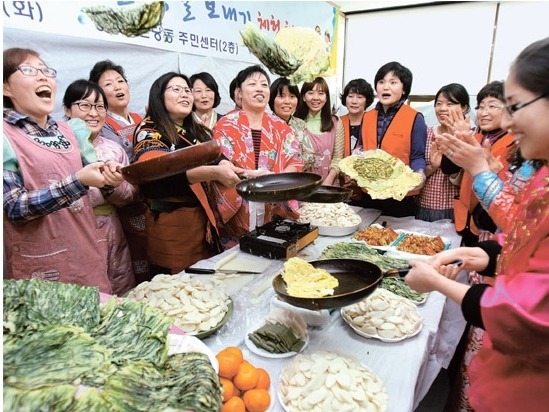
Now that you’re married to the love of your life, you’ll probably be spending time with his family on the big national holidays. And the two big ones out of the year, Chuseok (추석) and Seollal (설날), are typically when families gather with their aunts, uncles, cousins and grandparents, the whole shebang with lots of people and lots of food. But in most Korean families, women are in the kitchen all day to prepare the food. If you’re a woman that’s married into a Korean man’s family, don’t worry too much. It’s usually pretty fun to talk with the other ladies of the family while preparing the food. And even if you don’t have any idea how to do anything, there’s usually a bossy aunt in every family that takes over the kitchen like she’s running an army.
Tip: For Koreans, a new female family member not helping out in the kitchen isn’t always the best. So even if you’re all thumbs when it comes to cooking, try to offer your help (if you’re trying to get on their good side!).

6. New Years Mean Less Money
In exchange for hardcore bowing
Just like in many Asian countries, New Years in Korea (Seollal – 설날) is a time for little kids to receive cash envelopes from their elders to bring to school and compare with everyone how much they got. If you’re Asian, you know how awesome it feels to have envelopes piling up in your back pocket. But for all you non-Asians out there that’s never experienced counting that stash of New Years money in some corner when no one’s looking, sorry to say that you’ll only be counting the money you’re giving out. That’s because if you’re married into a Korean family, that means you’re part of the adult side. And even though you’ve never received money as child, you’ll be expected to give money to your own kids, as well as your nieces and nephews. At least they give you a hardcore New Years bow  in return.

6. You Might Have to Live with Parents (Again)
Korean mama food 
You thought it was over when you moved out didn’t you? Well remember when your Korean in-laws paid for all your crazy wedding expenses that almost mortgaged the house? Well they’re old and retired now. And for Korean families with more traditional values, many sons and/or daughters will invite their parents to live with them when they reach an elderly age. Although this is a changing trend in Korea, and many Korean families just tend to get the elderly parents their own home/apartment nearby (if they can afford it), if the Korean family that you married into has more traditional values, you might have to live with the in-laws for a while, which is not necessarily a bad thing. You’ll get real Korean mama food and a someone to help take care of the kids, too :) .
Special thanks to TalktoMeinKorean.com‘s Kyeongeun Choi for the help!
If you’re going to a Korean wedding, here’s the gifts you should give:
Korean Culture Says Buy These Gifts!

Dating in Korea: 11 Things You Should Expect!

Dating in Korea: 11 Things You Should Expect!

Dating can be difficult sometimes. Meeting the expectations of your significant other may not always be easy. But add on top of that cultural differences and you got a whole new pandora’s box. Read on to see what to expect if you want to date in Korea!
1. How to Meet Korean Singles
Meeting singles in any country can be a daunting task. That’s why in Korea, most of cupid’s work is done through friends. Instead of leaving things up to chance encounters (which can result in murderous strangers), Koreans prefer potential mates to have a reference to make sure both of you will be (to some degree) a match. Having that friend as a buffer will make sure he/she isn’t some crazy drunk that’ll come banging on your door at 3AM. Blind dates in Korea are extremely common and one of the most common ways to meet people in a relatively ‘safe’ way.
Note: Of course, this is not the only way Koreans meet potential baby mamas and daddys. People meet at schools, work, random encounters on the streets, etc. But sogaeting is one of the most preferred ways to meet other singles.
There’s even a few other “types” of blind dates, but those are specifically for different purposes:
미팅 (meeting) – A group blind date, mostly for young college students. A group of guy friends will meet a group of girl friends to hangout and have a good time.
선 (seon) – A blind date arranged by parents. This is a very serious date, where both parties have expectations of marriage right from the beginning (including/especially parents).
Here’s our video on “How to Meet Korean Singles”:
2. Public Displays of Affection (PDA)
Courtesy of Dustin Cole
Public displays of affection in Korea isn’t as open as it may be in other parts of the world. Although the younger generation’s mentality is undergoing a change, many Koreans are still not open to kissing in public. Simple pecks might be tolerable to some, but most Koreans will refuse to be seen in public participating in one of those movie-style open mouth kisses. Even something as simple as hugging significant others may be a bit more awkward than what you’re used to. You might be told to chill out if you’re being too affectionately touchy on a Seoul subway. Holding hands and linking arms, however, are quite common. 
Want to read more about hugs in Korea? See your homie’s personal blog about Hugging in Korea.
3. Splitting the Bill
If you’re hanging out with Koreans, you might want to split the bill the Korean way. That’s when one person pays for the bill and another person will pay for the next round. Some contemporary Koreans prefer to split the bill evenly, and that’s cool if you’re friends and all. But if you’re dating in Korea, that’s kind of a big nono (probably related to that complicated concept of jeong). When going to a restaurant, cafe, movie theater, or ice cream shop, it’s common practice for 1 person to pay at each of those stops. Now, who pays for what is up to debate for all couples around Korea. Some old school Korean dudes pay for everything, but recently, many Korean women have been offering their share, too. So it really depends on the person.
4. Lots of Couple-y Stuff
Couple culture is huge in Korea, and if you’re here with your Korean shorty, you’ll have the chance to enjoy all the perks of being part of a couple in Korea. To the dismay of lonely single people in Korea, couple shirts are all the rage and are very visible anywhere you go. It’s a clear declaration to the world to say “You’re MINE” (optional addition: ”MUHAHA”). You might get a couple ring for your 100 Day Anniversary (see below), to declare your love in ring form. Being a couple can be a highly public affair. With that said, that’s the highly visible side of dating in Korea. There are many people in Korea that aren’t fans of being over-the-top couple-y, and refuse to get couple shirts and rings. Yea, it’s a little too much for some Koreans too :P
See this Korea Q&A about why Koreans wear couple shirts!


5. Celebrating Every 100 Days
People around the world celebrate yearly anniversaries; really lovey-dovey couples celebrate monthly anniversaries; and unhealthily obsessed teenagers celebrate even more often. But in Korea, it’s a little bit different. Of course the big yearly milestones are celebrated just the same. But instead of counting months, the Korean equivalents to the lovey-dovey couples that celebrate monthly will instead celebrate anniversaires in denominations of 100 days (i.e. 100, 200, 300, 500, 1000). It’s more common for younger and more affectionate couples to celebrate this way, so not everyone pays attention to this. But this is definitely a Korean way to celebrate being in love.
Note: Before you bust out your calendar to start counting each day, just use the 100 day calculator on Naver!
Pages: 1 2

6. Carrying Bags
Generally speaking, most men are physically stronger than their girlfriends, and many women have big bags full of rather undefinable “stuff.” And in Korea, these general truths are practicalities. When hanging out with girlfriends, many Korean men will offer to hold their girlfriend’s big bag full of mysteries to save aching shoulders around the peninsula. There are no fears of looking strange when holding a bag with pink and frills; in Korea, it’s common practice for men to hold the girliest of bags. If you’re a guy, all those one-armed exercises you did when you were single might come in handy ;) .
7. Less Sleepovers
Ain’t nothing like spooning the night away in the comfort of your own bed. But if you’re in Korea, you might have way less spooning sessions than you’re used to, as it’s more common for unmarried people to live with their parents. And even if your parents are totally liberal with the whole idea of their kids having… relations… in the room next door, the vast majority of Korean parents are NOT cool with it. Of course, many single people in Korea live alone, too, and that’s when it’s up to the individual. But when living with parents come as part the package, it changes things up a lot. Like…
8. Curfews
You thought curfews were done when you went off to college. But in Korea, curfews are still relatively common for those still living with mommy and daddy. And although we would like to say this is equally true for men and women, unfortunately it’s more common for women to have daddy imposed curfews than it is for men. Age and employment status can’t override the “as long as you’re living in this house” argument, and that can sometimes result in women in the prime of their dating lives with curfews before midnight.
Curfew time up and need to go home by taxi? Read Keith’s Guide to Taxi Manners for Dudes.
9. Hanging Outside
Courtesy of Dustin Cole
Some of the best dates can take place at home. You know the type: candles, wine, and Marvin Gaye. But in Korea, since so many people live with curious and nosey parents, many Koreans prefer to hang outside away from their family members. So the majority of the time couples will spend with each other are outside of the home. That means heading out to some of Seoul’s unique and quirky theme cafes or maybe even discovering some good Korean food at hidden markets around Seoul. Doesn’t sound too bad does it? :D
Looking for more stuff to do on a date? We got you covered home slice! Check out these 25 Places to Go on a Date in Seoul.
10. Parents Might Break You Up
If you enjoy dating casually and just having a good time, parents probably won’t come into the equation. But if things ever get really serious with your boyfriend or girlfriend, you might be talking about marriage. And when it comes to Korean marriages, parents usually have the final say. If team mama and papa don’t like you, that most likely means the end of your Korean love affair as many Koreans find it very difficult to go against their parents, especially when it comes to marriage. It sucks, but what can be said to the woman who carried a nine pound ham in her stomach for the better part of a year. You win momma.
11. Meeting Friends & Family
Because people are scared of parents that might put their summer romance to rest, it’s not that common to introduce family members to a new boyfriend or girlfriend. That’s usually reserved for when you know a relationship is getting serious. But in Korea, you might not be introduced to friends either. Although many Koreans would totally introduce you to everyone he/she knows, some people in Korea do not want to see George Costanza’s “World’s Colliding” theory come true. It might be cool to hang out with your mutual friends from the photography class. But you might not ever meet your significant other’s college buddies. We don’t want these world’s exploding now, do we :)

Have you dated Koreans? Write your experiences in the comments!
If you’ve survived the pitfalls of dating in Korea, you might want to get ready to get married:
Here’s 6 Things You Should Know If You Want to Marry a Korean!

Tuesday, May 21, 2013

Employment possibilities in South Korea


Jobs

Employment possibilities in South Korea

As a newly industrializing economy, South Korea offers many opportunities for employment for foreigners; anywhere from teaching English, to international project managers, to placement in high-tech industries.
Jobs
South Korea experienced a financially devastating crisis in 1997. However, its economy has been steadily progressing ever since and continues to grow today.
Following the Asian Financial Crisis of ´97, many Westerners fled the area and took with them the important resource of language. Due to the shortage, English-speaking foreigners are highly sought after in every occupational field. Whether you speak English or not, it is to your advantage to have a high school diploma and a college degree in order to heighten your marketability.

Typical industries and sectors

South Korea is one of the most technologically advanced and digitally linked countries in the world. As a leading exporter of automobiles, cell phones, and other high-tech devices and a growing competitor in information technology, specialists in these fields are needed in Korea.
Seoul, the capital and largest city in Korea, is the center of everything from economy and politics to culture and international business. Some of the world’s largest companies are headquartered in Seoul and its surrounding area.
Aside from its agricultural aspect, most of South Korea’s economic activity takes place in the capital city. It is also easier to find jobs as an English tutor/teacher in big cities like Seoul where the pay tends to go up in proportion to the cost of living. For those looking for work outside of Seoul, other metropolitan cities in South Korea include Busan, Daegu, Daejeon, Gwangju, Incheon, and Ulsan.

Employment trends

Due to the high demand of native English speakers in South Korea, expatriates can easily find jobs tutoring and teaching English. Translators for any industry are also sought after. Most foreigners who choose to teach English in Korea end up working at "hakwons" (private foreign language institutes).
Other popular places to utilize your language skills include:
  • university language institutes
  • corporate in-house language exchange programs
  • private tutoring courses
  • editing/public relations at an advertising company
  • government/private research institutes
Current employment trends show a favorable lean towards certain jobs in:
Finance:
  • fund managers
  • foreign exchange dealers
  • insurance brokers
  • insurance specialists
  • securities analysts
  • stockbrokers
Information technology:
  • database administrators
  • information system analysts
  • Internet consultants
  • IT system consultants
  • network specialists
  • programmers
  • web designers
  • web masters
International business:
  • foreign market researchers
  • international project managers
  • international outsourcing specialists
  • copyright specialists
  • database specialists
  • marketers
  • merchandisers
  • microelectronics specialists
  • robotic specialists
and especially in marketing:
  • direct marketing system designers
  • IR specialists

Further reading